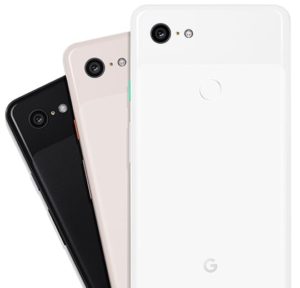

Google is reportedly testing an internal 3D face unlock system codenamed “Project Toscana,” a move that could signal renewed interest in stronger facial biometrics for Android device authentication.
Android Authority describes Toscana as a depth-based approach aimed at working reliably across different lighting conditions. That matters because the practical limitations of camera-only face unlock—especially in low light—have been a recurring challenge for handset makers, and because 2D implementations are generally easier to spoof with a photo or screen replay than depth-aware methods.
A 3D face pipeline typically relies on hardware that can estimate facial depth through techniques such as structured light, time-of-flight sensing, or stereo imaging. While the report does not specify which sensors are involved, the concept is to add a depth signal that raises the bar for presentation attacks compared with a standard RGB camera match.
Google has not confirmed the project and has not announced any device plans. That leaves several operational questions open, including how the system would be classified within Android’s biometric strength framework and how it would be bound to trusted hardware such as a device’s Trusted Execution Environment. Those details are central to whether a face modality can be used for higher-assurance scenarios beyond basic unlock.
The report also revives a larger platform narrative. Google previously pushed face unlock as a flagship capability on certain Pixel models, then shifted away from dedicated facial biometric hardware in later generations. If Toscana moves beyond internal testing, it would put Google more directly in the lane occupied by Apple’s Face ID, which uses specialized sensor hardware to support depth-based facial recognition.
For mobile identity and authentication stakeholders, the takeaway is less about a codename and more about the possibility of a higher-confidence facial biometric on Android—one that could shape how users authenticate to devices, apps, and services where biometric strength and anti-spoofing expectations are rising.
Even if Toscana never becomes a product, the direction is notable: platform teams are under pressure to treat face unlock not just as a convenience feature, but as a security control that must be evaluated in terms of spoof resistance and hardware binding. Whether Google ultimately pursues dedicated sensors broadly, or a narrower implementation on specific devices, will determine how widely a 3D face option could apply across Android authentication scenarios.
Sources: Android Authority
–
By the Mobile ID World Editorial Team